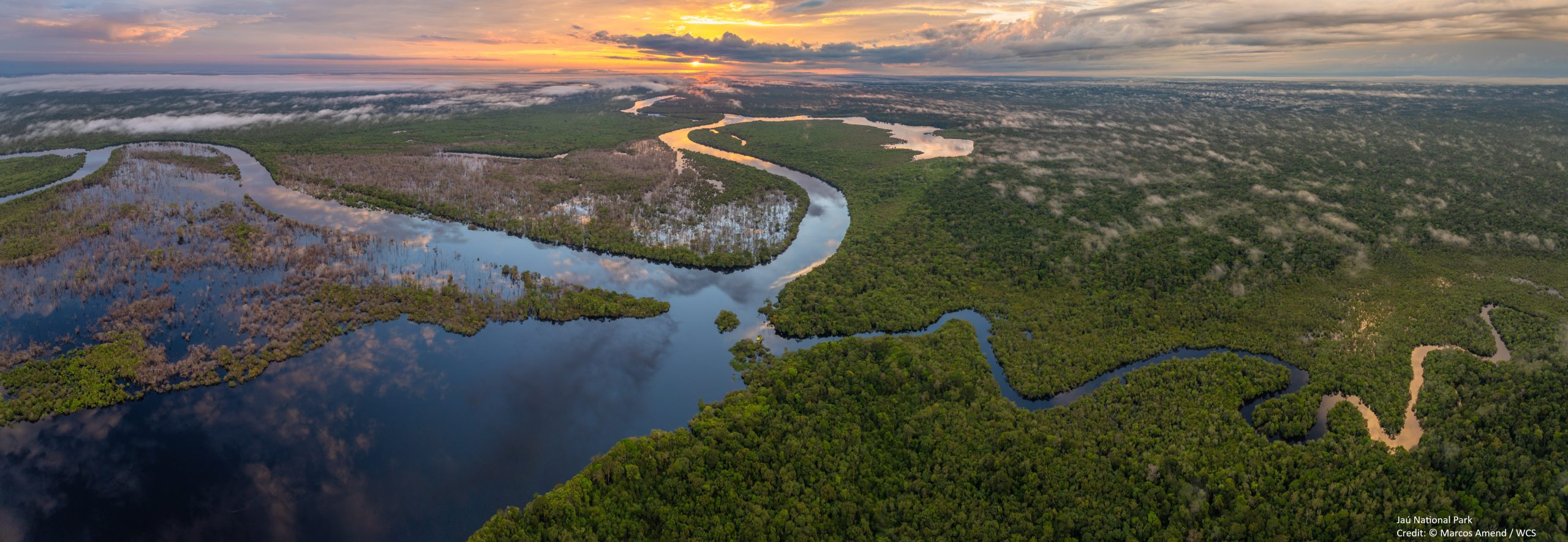
HIFOR, the High Integrity Forest Investment Initiative, led by the Wildlife Conservation Society (WCS), has released the revised HIFOR Methodology (v2.1) alongside an updated HIFOR Guide and Standard (v1.1). The revised documents will be used across HIFOR’s three pilot projects currently underway, and will apply to any new HIFOR projects initiated in the future.
The methodology update reflects HIFOR’s commitment to continuous improvement, drawing directly on lessons from implementation and an evolving global landscape for integrity in biodiversity and nature finance.
“High-integrity forests are among the most valuable natural assets on Earth, yet the finance needed to sustain them has remained structurally out of reach,” said Tom Evans, Senior Director for Forest Conservation at WCS. “This update strengthens the HIFOR framework so that it remains credible, practical, investable and rooted in the realities of stewarding intact forests over the long term.”
Why the methodology has been updated
The revisions are motivated by three core drivers:
- Lessons from developing the three pilot projects, including feedback from partners and other stakeholders. This has highlighted areas where wording needed to be clearer, and where the framework did not fully anticipate practical implementation questions.
- Alignment with the High-level Principles to Guide the Biodiversity Credit Market, published by the World Economic Forum, the International Advisory Panel on Biodiversity Credits and the Biodiversity Credit Alliance.
- Revisions to the Forest Landscape Integrity Index (FLII), a key technical dataset underpinning HIFOR’s integrity assessment. Updates to the FLII algorithm have resulted in slight changes to the dataset and, in turn, to certain thresholds used within the methodology.
HIFOR pilots are being tested across three flagship sites: Jaú National Park in Brazil, one of the largest national parks in the Amazon basin and a UNESCO World Heritage site, Nouabalé-Ndoki National Park in the Republic of Congo, which also forms part of a UNESCO World Heritage Site, and the Indigenous Macroterritorio de los Jaguares de Yuruparí in the Colombian Amazon. All three pilots are backed by public–private collaboration, including development banks, financial institutions, philanthropies and governments.
What’s changing
Most updates are within the methodology, with corresponding updates to the guide and standard to ensure consistency across documents.
Key changes include:
- The reporting and unit verification cycle has been shortened from 10 years to 5 years, reflecting advances in the technical feasibility of monitoring that make a shorter cycle more practical for project management without compromising integrity.
- The methodology introduces an additional test to demonstrate long-term financial additionality, consistent with emerging guidance for “maintenance” or “stewardship” approaches that finance the continued existence of intact ecosystems.
- Requirements have been strengthened and clarified to ensure meaningful roles for Indigenous Peoples (IP) and Local Communities (LC) in governance and monitoring, with expanded framing on involvement and benefit distribution.
- The safeguards framework has been significantly revised and strengthened, including clearer alignment with international laws and normative guidance, refined detail on Free, Prior and Informed Consent (FPIC), new safeguards around data sovereignty, and requirements that any reported social benefits are explicitly recognised as valuable by beneficiaries.
- An explicit requirement has been added to describe the biodiversity values of a site, strengthening transparency around what is being conserved.
- Technical thresholds within the FLII dataset used to define a high-integrity forest have been updated in line with the revised FLII algorithm, along with new guidance on how projects should respond to future FLII updates.
- Further updates clarify and simplify buffer zone requirements and introduce more restrictive and clearer rules for grouped projects (projects involving multiple separate land management units).
A full list of substantive changes has been published alongside the revised documents.
What this means for HIFOR projects and partners
The updated methodology clarifies implementation requirements while keeping HIFOR’s core purpose – long-term finance for intact tropical forests. The framework is designed to support global, national and subnational conservation goals and monitoring.
“Integrity and investability must align,” said Ashley Camhi, Director of Innovative Finance for Forests and Climate at WCS. “This update ensures HIFOR remains a high-trust pathway for scaling finance to the forests that regulate our climate, support exceptional biodiversity, and sustain local stewardship.”