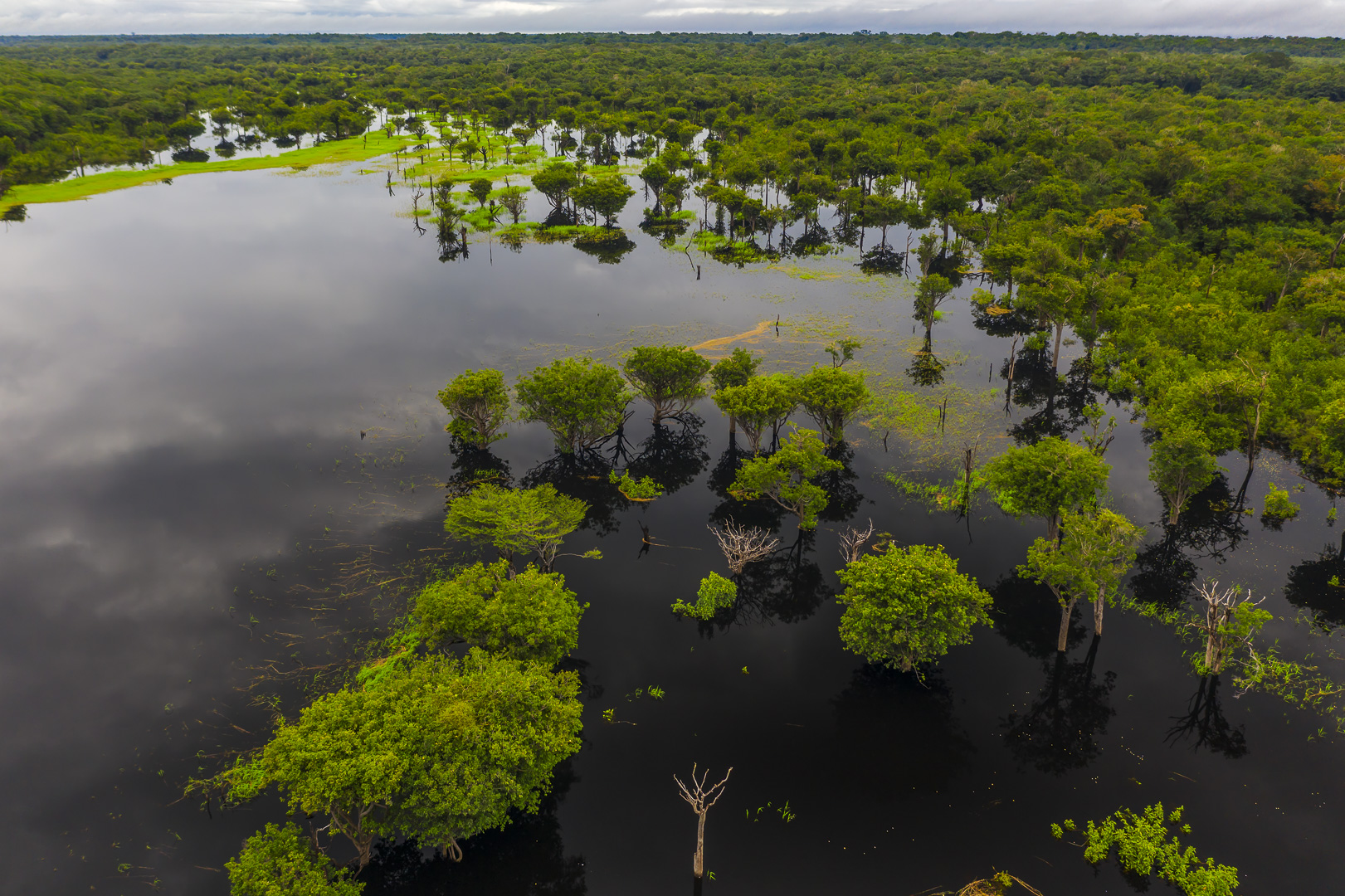

As companies accelerate their climate strategies, one crucial element often remains missing from the equation: nature itself. While carbon targets dominate the conversation, the natural systems that make economic activity possible – forests, water, soils, and biodiversity – rarely appear on the corporate balance sheet.
To unpack why this needs to change, we spoke with Ashley L. Camhi, Director of Innovative Finance for Forests and Climate at the Wildlife Conservation Society (WCS). Ashley explains how initiatives like HIFOR (High Integrity Forest Investment Initiative) are creating new financial pathways to recognize, maintain, and invest in the value of intact tropical forests.
A. Every corporate value chain – whether in food, energy, manufacturing, or finance – ultimately depends on nature’s infrastructure: forests that regulate rainfall, soils that sustain crops, and ecosystems that stabilize climate. Yet these services, though critical, remain invisible on balance sheets. Ignoring nature is like running a business without accounting for your core assets.
Initiatives like HIFOR are making nature’s value explicit by quantifying the ecosystem services provided by high-integrity tropical forests, allowing companies to align financial performance with the stability of the natural systems that sustain it.
A. When forests and ecosystems degrade, companies face real financial risks – supply chain disruptions from droughts or floods, rising input costs, stranded assets, and operational instability.
For example, rainfall generated by the Amazon underpins hydropower, agriculture, and energy production across South America. Losing this forest means losing predictable rainfall and energy supply. Yet most corporate risk models overlook these dependencies because the value of intact ecosystems remains unpriced.
HIFOR’s science-based approach helps expose and quantify these hidden dependencies, turning “externalities” into measurable business risks – and investment opportunities.
A. High-integrity forests are natural capital reserves – irreplaceable systems that regulate rainfall, store carbon, and sustain biodiversity. Even if they are not under immediate threat, they continue to degrade while providing ongoing ecosystem services worth trillions to the global economy.
Investing in their maintenance is like performing preventive maintenance on critical infrastructure: it costs far less to protect a functioning system than to rebuild it after collapse. Through HIFOR, companies can invest in verified, outcome-based instruments that ensure these forests remain intact – protecting long-term value chains and reducing systemic climate and water risks.
A. High-integrity forests are essential to achieving net-zero goals – but not only as carbon sinks. They stabilize rainfall, maintain cooling effects, and enhance carbon sequestration across landscapes, amplifying the effectiveness of corporate decarbonization strategies.
Investments in forests through mechanisms like HIFOR go beyond offsetting by supporting the maintenance of ecological integrity rather than simply compensating for emissions. This enables companies to demonstrate leadership beyond carbon – showing they are actively safeguarding the natural systems on which their operations, and their climate commitments, depend.
A. Most corporate nature finance has focused on avoided loss or restoration because there is an established carbon market that offers profit and a clear return on investment. Conservation of intact forests, however, has historically lacked comparable financial mechanisms – something new models like HIFOR and TFFF are helping to change.
A. Emerging mechanisms such as HIFOR and TFFF (Tropical Forest Forever Fund) are pioneering ways to channel large-scale finance into forest maintenance.
Unlike traditional carbon credits, HIFOR Units represent one hectare of well-maintained, high-integrity forest verified for the ongoing delivery of hydrological, carbon, and biodiversity services. These units, along with outcome-based bonds, give companies a credible, science-backed vehicle for investing in forest integrity – creating measurable conservation outcomes and reducing systemic environmental risks across sectors.
A. Investing in nature yields strategic value: risk mitigation, supply chain stability, long-term access to key inputs like water, and enhanced brand equity. It strengthens license to operate, future-proofs production, and aligns corporate finance with evolving disclosure frameworks such as TNFD and ISSB.
By supporting initiatives like HIFOR, companies can demonstrate measurable impact on biodiversity, water, and climate integrity – improving investor confidence and meeting growing stakeholder demand for credible, nature-positive action.
A. Sectors most dependent on natural capital – food and beverage, energy, hydropower, consumer goods, and finance – have the most to gain, and the most to lose.
Companies sourcing from or operating in tropical regions rely directly on forest-regulated rainfall and climate stability. Financial institutions also face exposure through lending and investment portfolios. By investing in forest integrity through tools like HIFOR, these sectors can strengthen long-term resilience, reduce risk exposure, and contribute to global biodiversity and climate goals.
A. Nature is not a corporate responsibility issue – it’s a balance sheet issue. The stability of every business ultimately depends on the integrity of the ecosystems that sustain it.
Companies that continue to treat nature as optional are underestimating systemic risk. The shift needed is from viewing nature as charity to viewing it as infrastructure. Forests, watersheds, and biodiversity are the world’s operating systems – investing in them isn’t philanthropy, it’s risk management.
A. COP30 in Brazil is a once-in-a-generation opportunity to place nature at the center of the climate agenda. As the Amazon – the world’s largest expanse of high-integrity tropical forest – hosts the talks, global attention will turn to how we finance the protection of intact ecosystems.
HIFOR and initiatives like TFFF can help translate that momentum into action, offering companies and investors a credible, scalable pathway to put nature on the balance sheet – not just as a moral imperative, but as a foundation for economic and planetary stability.
As the world moves through COP30 and beyond, nature is no longer a peripheral concern – it’s the foundation of every sustainable business model. Tools like HIFOR and TFFF signal a new era in corporate environmental leadership: one where protecting the planet’s most intact forests is recognized not as a cost, but as an investment in long-term value creation and resilience


